

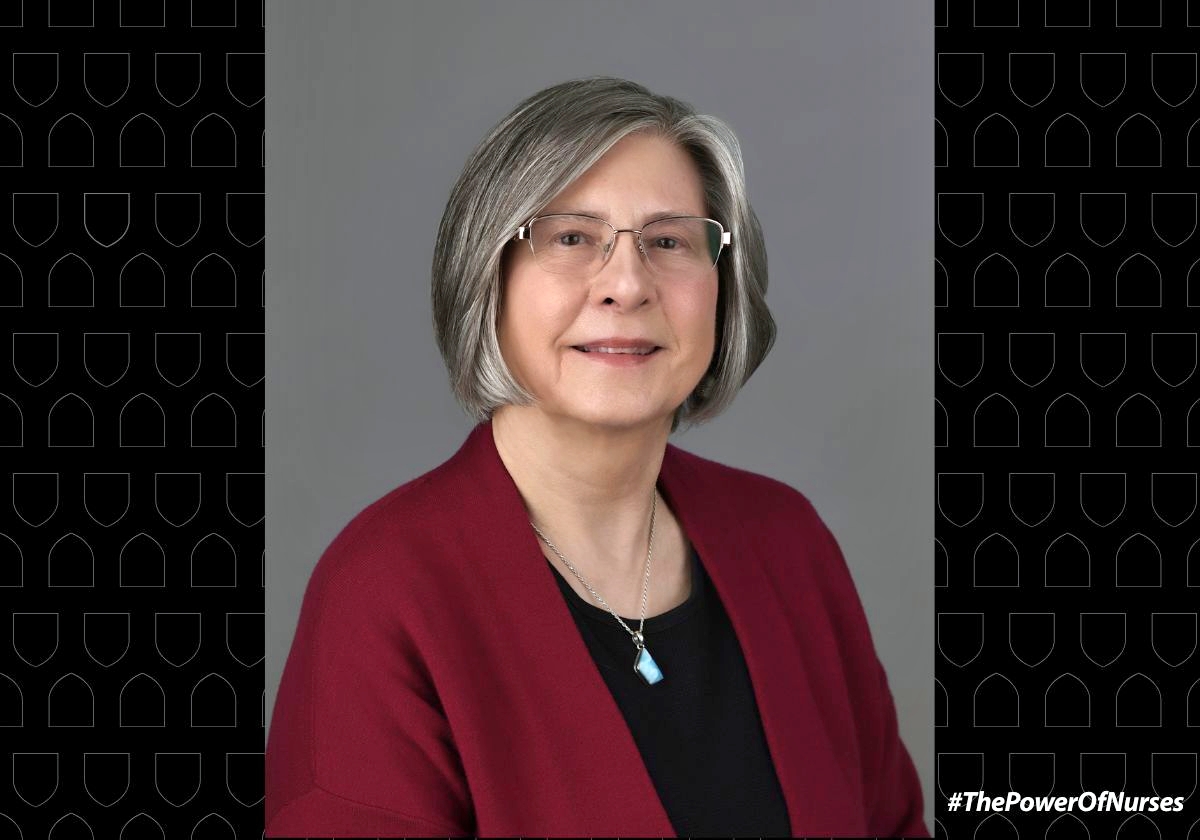
USask Nursing Grad Blazed the Trail for Forensic Nursing in Canada
Sheila Early helped develop the first forensic nursing program in British Columbia and was recently named a Member of the Order of Canada.
By Elizabeth IrelandSheila Early (BSN’69), a graduate of the University of Saskatchewan (USask) Bachelor of Science in Nursing program, is a Canadian leader in the field of forensic nursing.
On December 31, 2025, Early was honoured to be named a Member of the Order of Canada.
Describing news of the honour, Early says: “I was floored. I had to sit down immediately.”
Now residing in Surrey, British Columbia, Early helped develop the provinces first forensic nursing program, which provides survivors of violence with improved access to essential, patient-focused services and trauma-informed services.
Early’s work changed how healthcare, legal and law professionals respond to violence in Canada.
With a career that has extended more than five decades, Early’s professional achievements are numerous.
She is a past president of the International Association of Forensic Nurses (IAFN), and she co-founded the Canadian Forensic Nurses Association.
Early also created Canada’s first classroom-delivered forensic health sciences certificate program.
After surviving a car accident as a young child, Early decided that she wanted to be a registered nurse.
She graduated from the University of Saskatchewan's nursing program as “a married student.” She then worked more than 36 years in emergency departments in Saskatchewan and British Columbia.
Early still has deep ties to the province of Saskatchewan, including a family cottage on Emma Lake.
“A Saskatchewan girl never really leaves,” she says.
In 1992, while working at Surrey Memorial Hospital in British Columbia, Early became the first registered nurse to perform a sexual assault exam in the province.
She started the provinces innovative forensic nursing program after recognizing that “there was a startling lack of care, and we could do something better than what we were doing” for survivors of sexual assault.
Early refers back to three sexual assault patients from her emergency department days that “stayed with me.”
The patients were deeply impacted by their experiences and suffered from ongoing mental health issues, including post-traumatic stress disorder.
At the same time, Early felt that police officers and prosecutors were not getting what they wanted from the emergency department to properly perform their roles in the justice system.
“The devastation of violence and trauma on individuals, families, communities, and society was clear to me from the beginning of my career in emergency,” says Early.
Interestingly, nurses in the United States cities of Amarillo, Memphis, and Minneapolis were innovating in the field of forensic nursing in the 1970s.
By 1995, the American Nurses Association had recognized forensic nursing as a specialty.
Early looked south of the border to move the specialty of forensic nursing forward in Canada and soon became the primary forensic nursing educator in British Columbia.
During her career, Early has been mentored by Virginia Lynch, a forensic nurse who is recognized globally as a pioneer.
In 1995, Lynch wrote: “Forensic nursing is one example of an innovative expansion of the role nurses will fill in the health-care delivery system of the future. Because most emergency personnel and pre-hospital care providers ordinarily have only secondary interests in forensic matters, the motivated and skilled forensic nurse can serve as an invaluable resource for the criminal justice system, the hospital and the patient.”
Today, forensic nursing is made up of subspecialties that interact uniquely with both forensic science and our criminal justice system.
Subspecialty roles include clinical forensic nurse, forensic nurse investigator, forensic nurse examiner, sexual assault nurse examiner, forensic psychiatric nurse, corrections nurse, legal nurse consultant, nurse lawyer, and nurse coroner.
In addition, forensic nurses are regularly called on to testify in court.
Early describes how forensic nurses work with individuals across their lifespans — from a child who is born to a drug-addicted mother to a homicide victim in their 20s through to an elderly person suffering abuse by a relative.
Together with burnout, a high-risk factor for those working in forensic nursing is vicarious trauma.
This type of trauma is described as emotional and psychological impact experienced by those who regularly support or provide care to violence and trauma survivors, including children and those experiencing intimate partner violence.
“As a forensic nurse, there is no way you are not affected,” says Early.
How has she maintained work-life balance in such a demanding profession?
Early describes her 54-year marriage, her two daughters and sons-in-law, and her four grandchildren. She has been a widow for six years.
Reflecting, how does Early describe progress in the field of forensic nursing?
“Changing how victims of violence and trauma experience health care across Canada. We expect more of health care now,” she says.
“My motivation has always been to provide the best possible nursing care for my patients.”
This story originally appeared in the Saskatoon StarPhoenix Nursing Week special feature.