

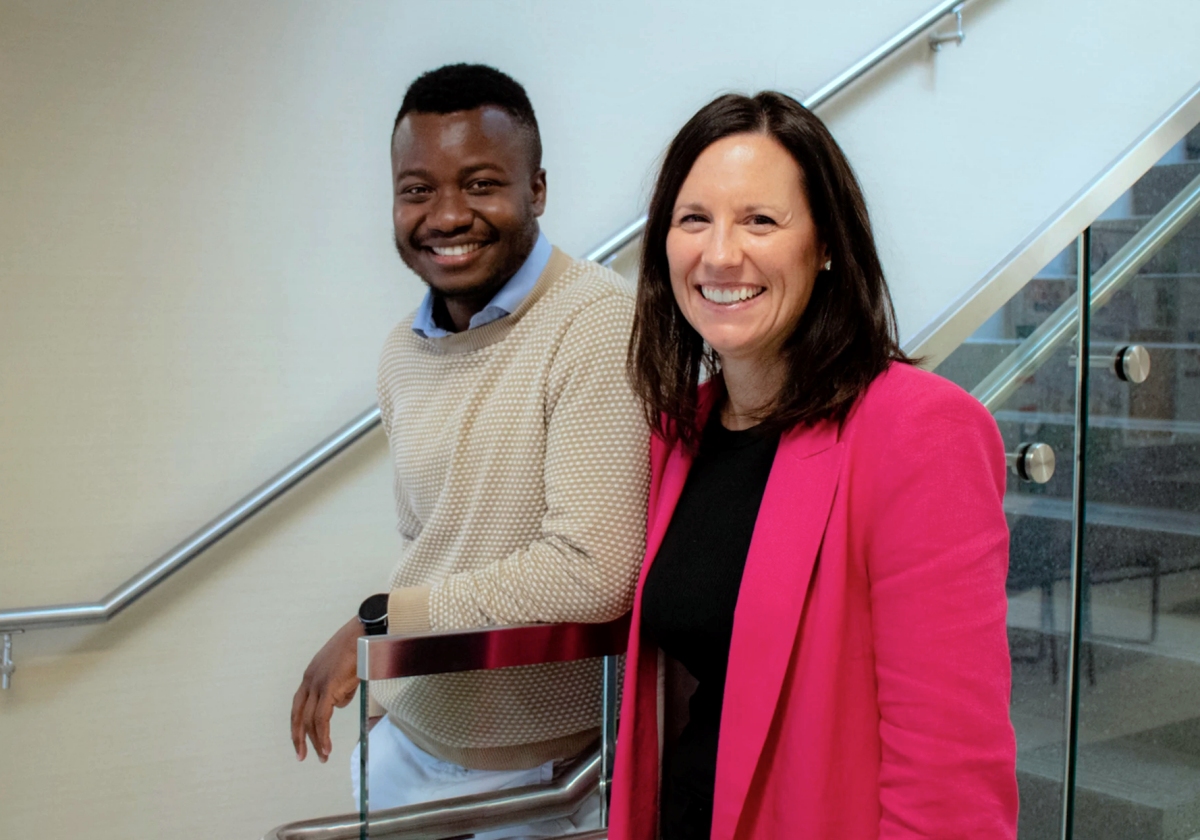
Dr. Charlene Thompson Celebrated by Saskatchewan Health Research Foundation
Community Voices Leading the Way: Improving Immunization Programs in Rural Saskatchewan.
By Sarah Kasleder, Saskatchewan Health Research FoundationIn southwest Saskatchewan, families, healthcare workers, community partners, and researchers are coming together with a shared goal: to strengthen immunization programs in ways that reflect the realities of rural life. Dr. Charlene Thompson and Dr. Jacob Alhassan were invited by leaders in the South West Health Networks of the Saskatchewan Health Authority (SHA) to join them in this work, seeking new ways to better understand the barriers families face and to collaborate on ways to improve care in their community.
Together, they applied for funding, and the project titled “Improving Immunization Services for Children 0-6 Years of Age in Southwest Saskatchewan” was co-funded by Jim Pattison Children’s Hospital Foundation (JPCHF) and Saskatchewan Health Research Foundation (SHRF) through the 2024-25 SHRF Child and Youth Solutions Innovation Grant. It was recognized as a top-ranked project in its category and was recently selected to receive a Saskatchewan Health Research Foundation (SHRF) Excellence Award. This honour will be formally presented at the Santé Awards in January 2026.
Answering the Call
Drs. Thompson and Alhassan saw the project take shape after being contacted by leaders of the Southwest Health Networks to collaborate on better understanding the factors influencing childhood immunization and strengthening services in ways that meet their community's needs.
“They reached out and said, ‘We see what you’re doing, and we think we could really use something like this down here,’” recalls Dr. Thompson. “So, while the data indicated room for improvement, this work was truly driven by the community itself.”
For Dr. Alhassan, who had primarily concentrated on international research, the invitation was an opportunity to shift his focus closer to home. “This project reminded me of the importance of finding homegrown solutions right here in Saskatchewan, while also applying what I’ve learned globally to strengthen health services in our own communities,” he explains.
Meeting Rural Communities Where They Are
The challenges for families in rural Saskatchewan often differ from those in larger centres. Transportation, distance, and fewer clinic options can all make access more difficult. At the same time, communities are becoming more diverse, with families from different cultural, language, and social backgrounds whose experiences with immunization may be shaped by various factors.
“There’s just less out in terms of appointments, clinics, and services [which is a common challenge in rural and remote Saskatchewan communities],” says Dr. Thompson. “And then there’s the importance of creating opportunities to hear directly from families about the perspectives and experiences they bring to these conversations. We work with our partners to develop questions that really dive into what’s going on, guided by their experiences.”Inclusivity has been central to the approach. The research team works with the Newcomer Welcome Centre in Swift Current to offer surveys in English, Tagalog, and Spanish, and to provide interpretation support for interviews.
“Even that step of offering different languages shows families that their voices are valued,” says Dr. Thompson. “It’s about ensuring families feel included and that their voices help shape the conversation.”
Dr. Alhassan emphasizes that no single approach will work for everyone. “We’re really focused on creating a tailored suite of interventions that speak to different groups’ contexts. It’s about asking: what works, under what circumstances, and how can we amplify that?”
Working Alongside Communities
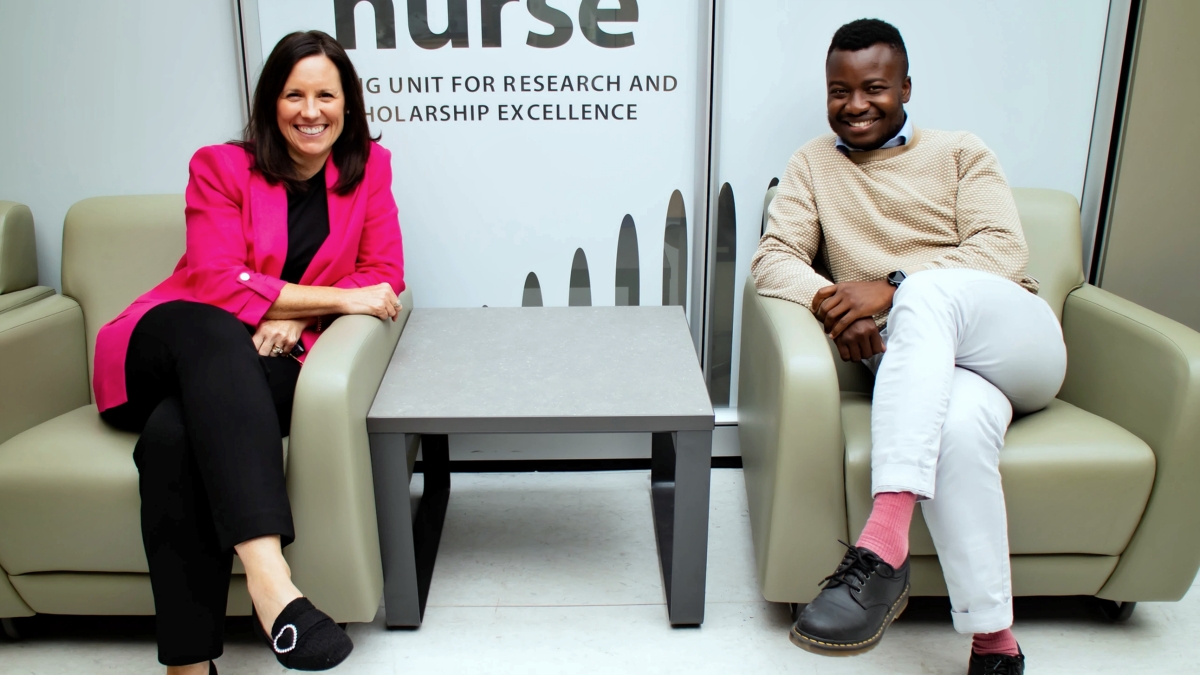
From the beginning, Dr. Thompson and Dr. Alhassan understood the importance of being present in the community. “Being present and showing up matters,” says Dr. Thompson. “In public health, there’s a saying that sometimes you walk behind, sometimes you walk beside, and sometimes you walk ahead. The key is knowing when each is needed, and that comes from listening to the community.”
That approach has shaped how they connect with families and healthcare providers. Rather than leading from the outside, the project is guided by local voices. “Healthcare workers, in particular, are eager to have these conversations,” adds Dr. Alhassan. “When someone shows up to ask, ‘What else might work? What are you seeing?’ That kind of knowledge sharing is a gift.”
Support that Makes it Possible
Both researchers credit SHRF and JPCHF with making this work possible.
“Opportunities like SHRF’s Solutions Grant are life-changing, career-changing, and community-changing,” says Dr. Thompson. “We would not be able to do this without SHRF and JPCHF support.”Dr Alhassan adds, “The Excellence Award is a recognition of what’s possible when community partners, healthcare workers, and researchers come together. Having local funding that allows us to address local problems makes a real difference not just for our careers but for the communities we serve.”
Looking Ahead
While the study is still underway, Dr. Thompson and Dr. Alhassan are already seeing the power of community-driven research. “This type of research reinforces the value of community-based approaches to improving health outcomes,” says Dr. Alhassan. “It’s about preventing problems before they happen, by creating awareness and opportunities for families to access care.” For Dr. Thompson, the project has been transformative. “I’ve discovered a real love for rural communities that I didn’t know I had,” she reflects. “There’s a sense of connectivity, of people knowing each other, that makes the work especially meaningful.”
As the project continues, one thing is certain: the solutions that emerge will be shaped not by outside experts, but by the voices of families, healthcare workers, and community partners who call rural Saskatchewan home.
This story was originally published on the Saskatchewan Health Research Foundation website.
Together, we will undertake the research the world needs. We invite you to join by supporting critical research at USask.